Beautiful Words

Jackson Pollock, Autumn Rhythm, No. 30, 1950

“The truth is not always beautiful; nor beautiful words the truth.” – Lao Tzu

Over the past year or so, I have found myself going back 10+ years and listening to old podcasts and reading old articles. Initially, I wanted to compare pre/post-COVID cultural narratives to gain a better understanding of how things have changed. Within this, I have noticed a few things, but none more pronounced than the decline of authentic conversation in the public domain.

I am a much better auditory learner, so for a long time (think audio CDs!), I’ve been seeking out ways to learn through listening. When seeking to learn, I want to not just know what is, but I want to understand what is true about any topic. To do this, I have found that I need to set up filters and boundaries on who I learn from.

One technique I’ve used is to check what excites me. This filtering system revolves around things that catch my attention. Personally I am most optimistic about ideas, so I can often be captivated (idealistically speaking) by novel ideas or notions. So, when I get excited about something that is net new to me, I need to validate the content’s authenticity and avoid being taken by mere sales pitches.

I check what i’m hearing by observing if the speaker repeatedly conveys the same message in the same way in other forums. This helps me discern if the speaker is responding spontaneously and thoughtfully to a specific question or repeating something reversed. To be clear, neither of these things are good or bad; it’s just important to me to understand the information you consume in context to its reason and delivery. To know if the speaker is simply promoting their personal narratives or if they are thinking new thoughts out loud.

In essence, I ask myself two crucial questions about what I hear: 1) Why is this being said now? 2) How does understanding the answer to question 1) enrich my understanding of the what’s being shared?

Just as children learn from our actions rather than our words, exposure to authentic, spontaneous ideas, reactions, and honesty nurtures our own ability to (re)learn how to live authentically and truthfully. Constant exposure to rehearsed, curated ideas projected by individuals aimed at pleasing a collective audience unknowingly teaches us that performance, not authenticity, is how to live.

It’s better to hear a single instance of someone speaking truth about an irrelevant topic than to seek relevance from the performance of many.


Over time, when the information space is dominated by performance, our ability to detect authenticity becomes distorted. We mistake authenticity for dissent and start to believe that provocative ideas hold more truth simply because they garner more attention. The truth is however, that this kind of performance has nothing to do with what is true.

In a world full of beautiful words, I find myself longing to let go of the need for any of it, to increase my chances of getting closer to the freedom offered by what’s real. Even at a basic level, it seems to me that the pure joy of a moment of true spontaneity is somehow lost in the curation and performance.

It seems to me that such things makes the pursuit of what’s true worthy of a closer look.
 

Image

Our Dark Teacher

Inspiration:

“Allow the heart to empty itself of all turmoil” – The Tao Te Ching

Motivation:

How do we find gratitude for our darkest teacher? Who are the people who teach us the lessons we didn’t want to learn?


Our Dark Teacher

Sometimes I forget just how much generosity it takes to simply be ourselves.

We moderate, regulate, and over compensate to be something. What? It is likely if we were asked in that moment, of trying and changing and compensating, what we were aiming for, we would not know.

More like that, less like this, or just this, only in this other way.

We find ourselves contorting around an endless road of participation in something that has neither a means nor an end in the truth of who we really are or even aspire to be.

It takes a deep sense of giving to openly allow ourselves to surrender to the truth of where we are, when where we are is not close to the potential of where we would dream to be.

It is an omnipresent need in the times when what we are capable of creating does not meet our idealism of creativity. When connections falter, ideals break and time passes to quickly.

So we stumble, and fall. We fail. We get rejected. We don’t meet our own expectations. As we stumble, we remember the dark teacher that pushed us down. As we fall, we remember the one that took the ground from below us as we slept. Confronted by rejection we feel our hearts weep for the time we didn’t ask but were taught, too young, too soon, the feeling of neglect.

The dark teacher is the person, place, time or space sent to educate us on the lessons we never dreamed of, to fill our worlds with experiences that we never asked for and to bring us to our knees with an abusive, neglectful reality that is too real to look directly in the eyes.

How easy it is to forget just how much generosity it takes to believe that we ourselves are reason enough. How quickly we forget, that we are the ones that need it most.

It takes a kind of primal energy, to connect to the place within ourselves, to remember, like a homecoming of sorts, that if our needs are not pinned to our within, we are almost certainly going to go without.

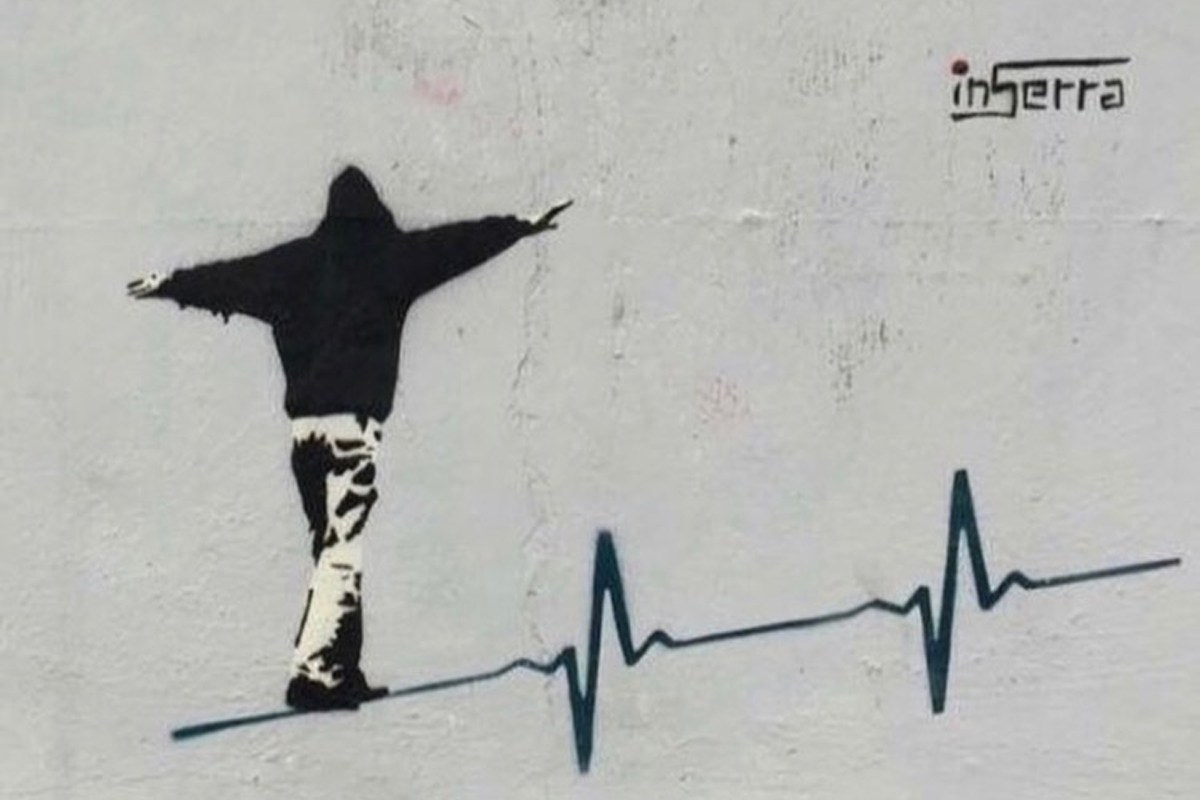
I have often thought about the tightrope we walk, in the face of our own honest expression of who we are, what we think and how we want to be in the world. It comes from a narrative of never really fitting in, not at home, not at life.

My own fine line to dace between the wanting to be myself and longing to be in communion with another. The balance between the expression of the cold of truth and warmth of acceptance.

Do we let our big dreams of being of service, of creation, of leaving a truthful individual expression of ourselves in the world become the hardest obstacle?

If we surrendered to our own fallibility and forgetfulness and humbly said, I’m sorry, I forgot just how generous I need to be with myself would it empty our hearts of the turmoil that we too often use as a tool to against ourselves often expressed as needs?

“To know tranquility is to embrace all” says the Tao. I don’t think this was referring to a kind of apathy to the worlds suffering. To embrace all may simply mean to surrender to our own mediocrity as the foundation of our pursuit to find our greatness.

Perhaps it is that we are only ever accepted in the world outside with the depth of generosity that we are willing to give to our self.